
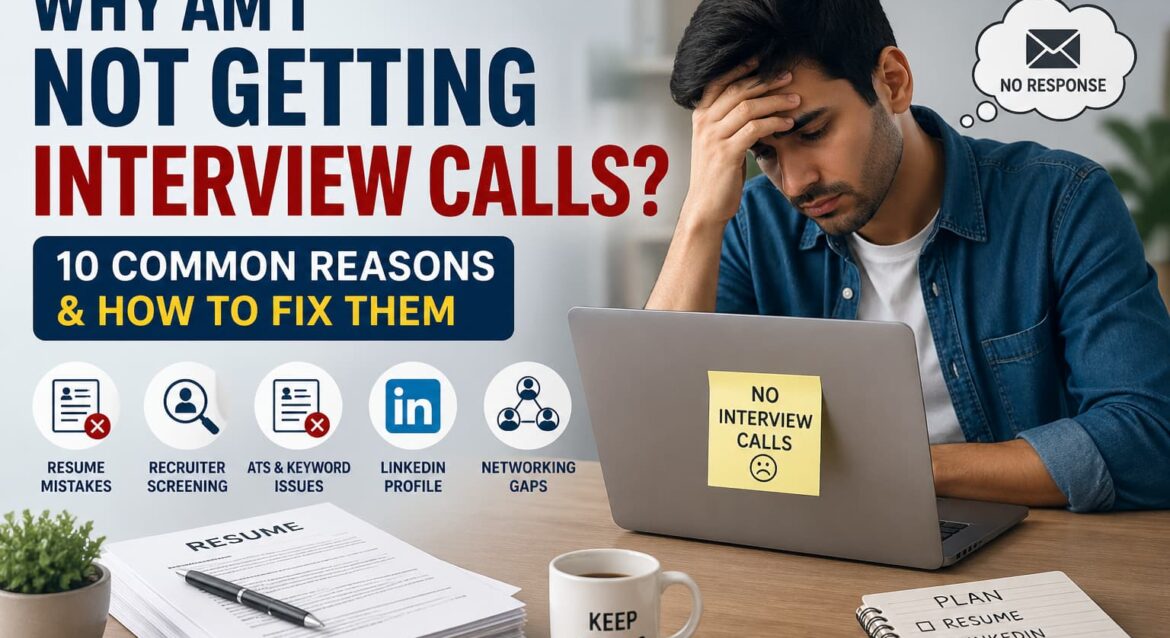
Why Am I Not Getting Interview Calls? 10 Common Reasons and How to Fix Them
If you keep asking yourself, “Why am I not getting interview calls?”, you are not alone. Many qualified candidates struggle with this issue despite applying to multiple jobs every week.
Not getting interview calls after applying can be frustrating, especially when you believe your skills and experience match the role. However, in most cases, the problem is not your qualifications—it is how your profile, resume, and job search strategy are positioned in today’s competitive hiring market.
Recruiters now use ATS software, LinkedIn searches, keyword filters, and referral networks to shortlist candidates. If your application materials are not aligned with these systems, you may be getting overlooked before a recruiter even reviews your profile.
Below are the most common reasons for not getting interview calls—and practical ways to improve your results.
1. Your Resume Is Not ATS-Friendly
Most companies use Applicant Tracking Systems (ATS) to scan resumes before they reach recruiters. If your resume is not formatted properly, it may get rejected automatically.
How to Fix It:
Use a clean format, avoid complex tables/graphics, and ensure your resume is ATS compatible.
2. You Are Missing Important Keywords
One major reason recruiters are not calling you is that your resume may not include the keywords recruiters search for.
How to Fix It:
Customize your resume for every application and include relevant skills, tools, and phrases from the job description.
3. You Are Applying Randomly Without Strategy
Applying to every available job without targeting relevant opportunities reduces your success rate.
How to Fix It:
Focus on roles that align with your experience, skills, and realistic career level.
4. Your LinkedIn Profile Is Weak or Incomplete
Recruiters frequently review LinkedIn profiles before shortlisting candidates. An unoptimized profile can reduce trust and visibility.
How to Fix It:
Update your headline, summary, experience, and skills with strategic keywords and achievement-based content.
5. Your Resume Focuses on Responsibilities Instead of Achievements
Listing duties without measurable outcomes makes your profile less compelling.
How to Fix It:
Highlight achievements, business impact, and results wherever possible.
6. You Are Not Networking Strategically
Many candidates depend only on job portals and ignore networking.
How to Fix It:
Build professional relationships on LinkedIn and seek referrals from industry contacts.
7. You Are Applying for the Wrong Roles
Applying for jobs beyond your qualification or outside your expertise lowers your chances significantly.
How to Fix It:
Apply for positions aligned with your experience level and relevant background.
8. Your Personal Branding Is Weak
Employers assess your professional presence beyond your resume.
How to Fix It:
Strengthen your personal brand through LinkedIn, certifications, projects, and online visibility.
9. You Are Not Following Up Professionally
Many candidates fail to follow up after important applications or interviews.
How to Fix It:
Send concise and professional follow-up messages when appropriate.
10. You Are Unprepared for Recruiter Screening Calls
Some candidates lose opportunities because they cannot explain their value clearly during screening.
How to Fix It:
Prepare a strong introduction and be ready to communicate your experience confidently.
Why Strategic Job Search Matters More Than Ever
In today’s competitive hiring environment, qualifications alone are not enough. Recruiters evaluate candidates based on visibility, positioning, branding, and strategic alignment with role requirements. According to LinkedIn’s hiring insights, candidates who optimize their profiles and use networking strategically improve their chances of recruiter outreach significantly.
A structured job search process helps candidates move beyond random applications and build a system that consistently generates better opportunities.
Why Am I Not Getting Interview Calls Even After Applying to Many Jobs?
Many candidates assume that applying to more jobs automatically increases their chances of success, but quantity alone does not guarantee results. If you are applying repeatedly and still not hearing back, the issue may be with your resume quality, keyword optimization, profile visibility, or application strategy. Understanding why you are not getting interview calls is the first step toward improving your job search outcomes.
How to Get More Interview Calls With a Better Job Search Strategy
If you want to know how to get more interview calls, focus on improving your overall job search approach rather than simply increasing the number of applications. A strategic job search includes ATS-friendly resumes, optimized LinkedIn profiles, targeted applications, networking, and interview preparation. Candidates who position themselves strategically often achieve significantly better response rates from recruiters.
Final Thoughts
If you are not getting interview calls after applying, do not assume you lack capability. In many cases, the issue is simply how your profile is being presented or how your job search is being executed.
By fixing the common mistakes above, you can improve your visibility, attract recruiters, and increase your chances of getting hired faster.
Need Expert Help to Improve Your Job Search?
Career Mentors Today helps candidates improve their job search performance through:
- Resume Optimization
- LinkedIn Profile Optimization
- Job Search Coaching
- Interview Preparation
- Career Counseling
What Recruiters Evaluate Before Deciding to Call You for an Interview
Many job seekers assume recruiters only check whether they meet the basic qualifications listed in a job description. In reality, recruiters evaluate multiple factors before deciding whether to shortlist a candidate for an interview. They review how well your resume aligns with the specific role, whether your experience demonstrates measurable impact, and if your skills match the employer’s requirements. They also assess whether your resume and LinkedIn profile contain the relevant keywords needed to appear in applicant tracking systems and recruiter searches.
Beyond technical qualifications, recruiters often evaluate your overall professional presentation. This includes the clarity of your resume, the completeness of your LinkedIn profile, the consistency of your career narrative, and whether your achievements are communicated in a compelling and credible way. If your profile lacks relevance, structure, strategic keyword placement, or clear evidence of value, recruiters may move on to stronger-positioned candidates—even if you have the right experience.
Understanding what recruiters actually look for can help you identify why you may not be getting interview calls. By improving your resume quality, optimizing your LinkedIn presence, aligning applications with job descriptions, and presenting your experience more strategically, you can significantly improve your chances of being shortlisted and contacted for interviews.